
IBM Design Challenge
Project Overview
Client: Open University Careers & IBM SkillsBuild
Project: IBM Design Challenge – Using AI for Sustainable Solutions
Date: February – March 2026
Format: Remote Design Sprint / Team Innovation Challenge
Role: Research, UX Design Thinking, Copywriting & Final Presenter
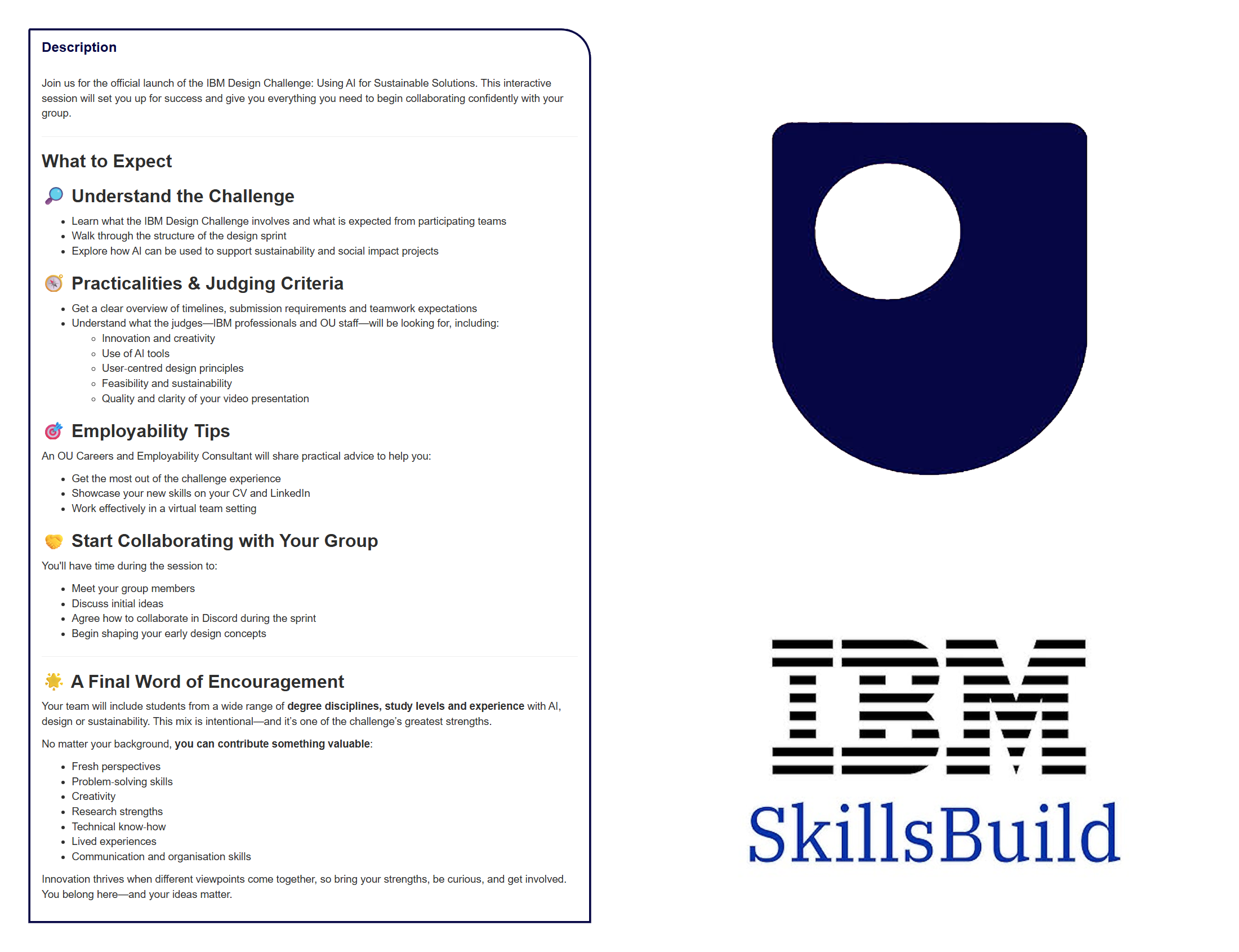
In February 2026 I took part in the Open University's IBM Design Challenge: Using AI for Sustainable Solutions, a multidisciplinary innovation sprint delivered in partnership with IBM SkillsBuild. Students from a wide range of subject areas were placed into remote teams and challenged to apply IBM's Enterprise Design Thinking methodology to develop an AI-powered solution addressing United Nations Sustainable Development Goal 12: Responsible Consumption and Production.
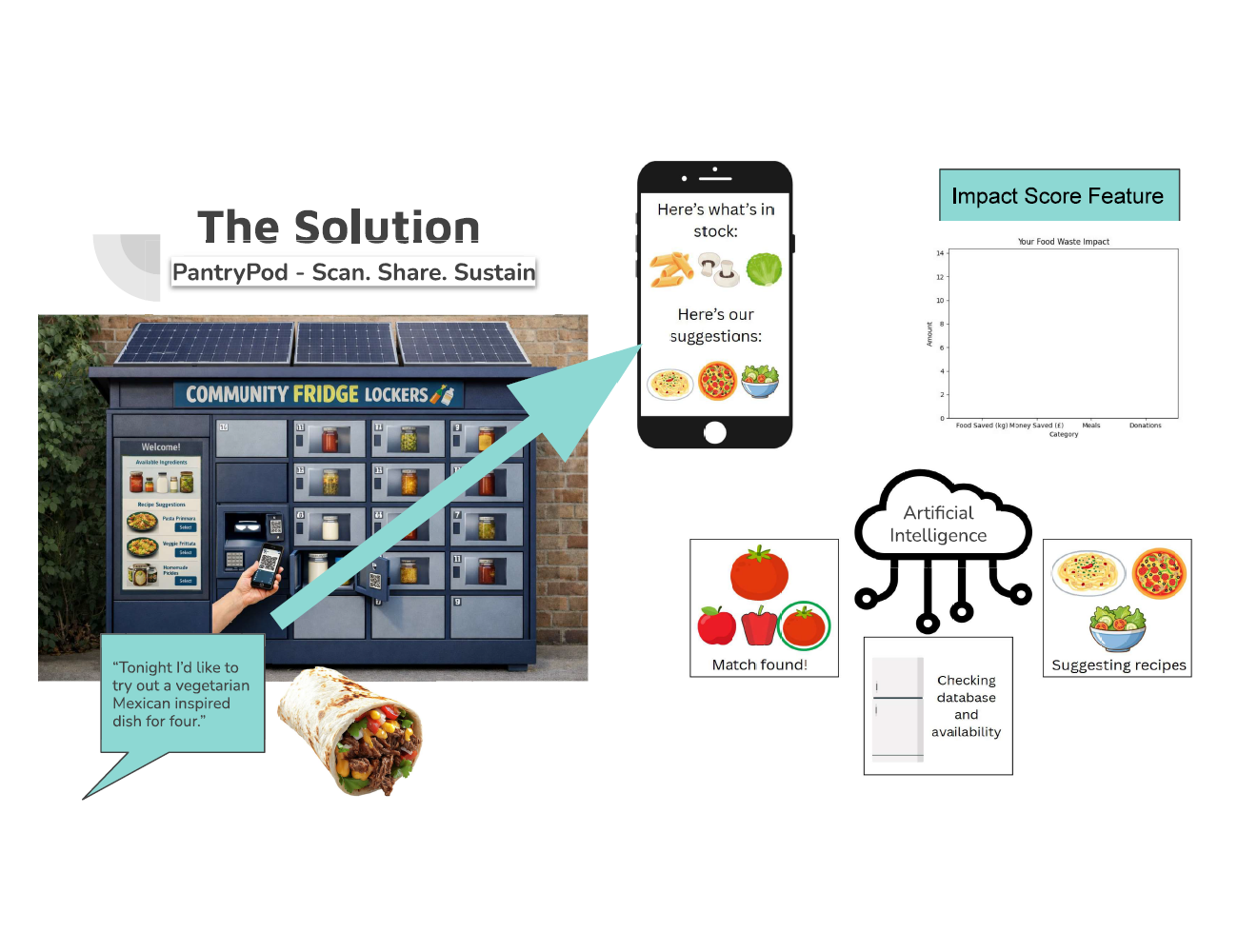
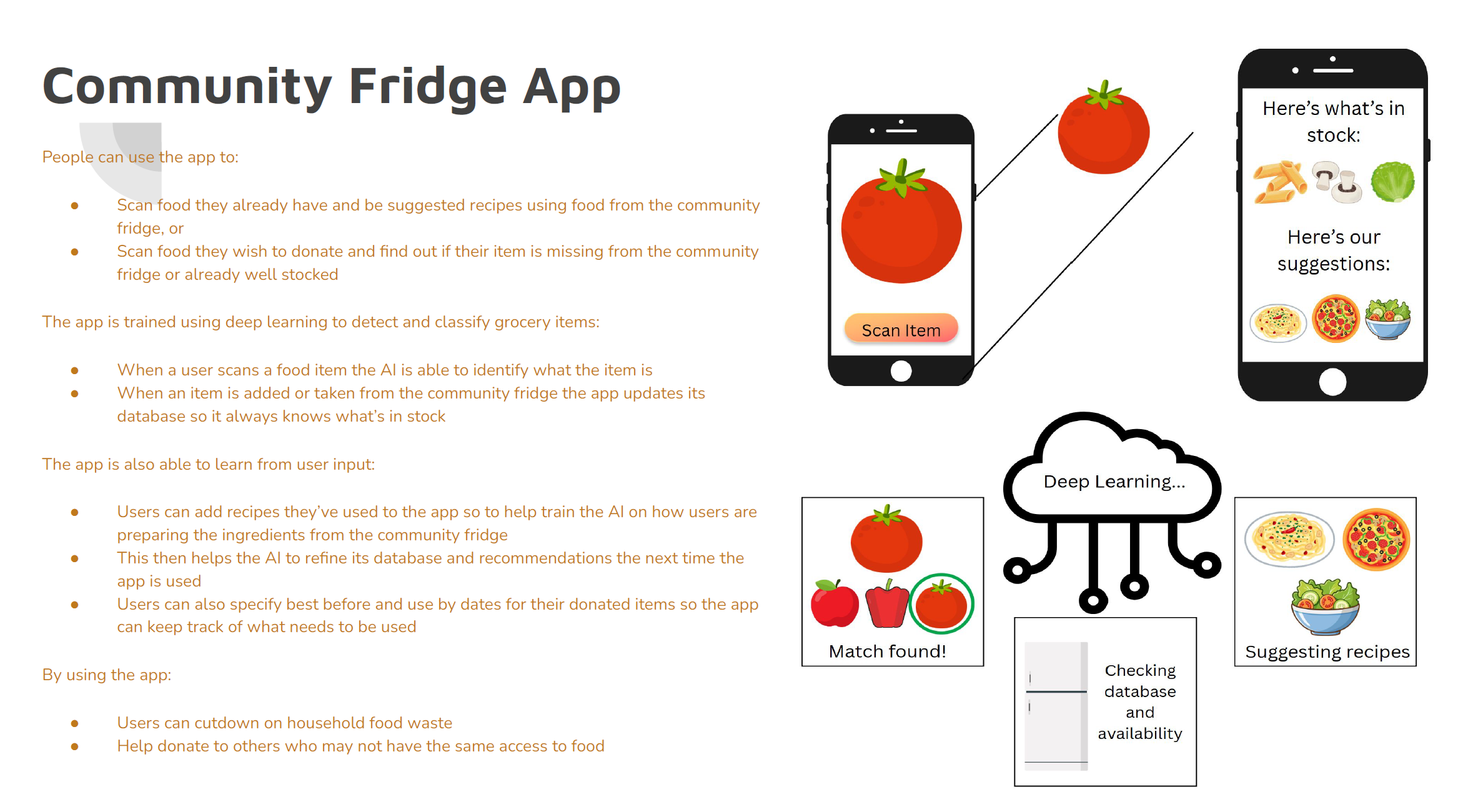
Working as part of an eight-person team, we explored the problem of household food waste before developing PantryPod, an AI-assisted network of solar-powered community fridge lockers. The concept combined computer vision, natural language processing, and machine learning to help people reduce waste, share surplus ingredients with their local community, and discover recipes based on available food.
I helped shape both the user experience and the final presentation of the project.
My responsibilities included:
researching the underlying problem of household food waste and sustainable consumption;
contributing to the team's design thinking workshops, including empathy mapping and idea prioritisation;
developing elements of the PantryPod concept and refining the user journey;
writing the script used for our final presentation;
delivering the team's presentation during the live showcase event.
My Role
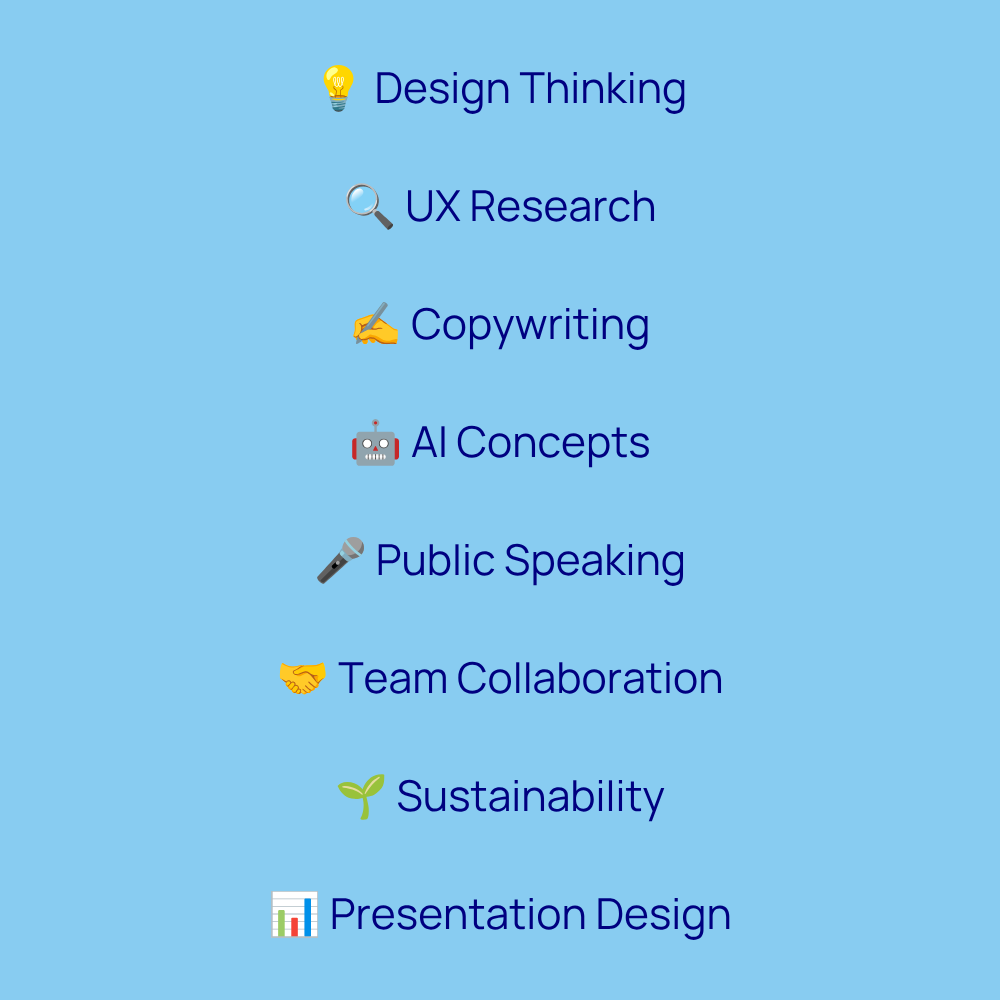
Skills Demonstrated
UX Research
Design Thinking
User-centred Design
AI Solution Planning
Copywriting
Public Speaking
Team Collaboration
Presentation Design
Problem Solving
Sustainability Research
Outcome
Our team successfully developed and presented PantryPod, an AI-powered concept designed to reduce household food waste through community food sharing and intelligent recipe recommendations. The project was presented to IBM professionals and Open University staff during the final showcase, where it received positive written feedback praising our application of design thinking, clear progression from user research to solution, and effective use of AI concepts.
Self Reflection
This challenge reinforced the importance of beginning with the user's problem rather than the technology. Working with students from different academic backgrounds also showed me how diverse perspectives improve the design process. Personally, the experience strengthened my confidence in presenting complex ideas to a professional audience while refining my ability to translate research into clear, user-focused communication.